20/12/2011

Chocolate

Intermission: Chocolate

Chocolate?

Yes, I know ... you can buy it in bars from the corner shop, supermarket, hypermarket, vending machine, specialist chocolate shop and even online.

I don't much like commercial chocolate. In the UK we have a lot of milk chocolate, which is so sweet by paleo tastes and the purer chocolate often uses soy lecithin as a stabiliser. Urgh!

I found a really good source of 100% chocolate from Hotel Chocolate - it's from Ecuador, and expensive! I use it primarily in Chilli recipes.

Can I make my own from cocoa powder?

I won't pretend to have absorbed all the facts yet, but on my online travels I found that making chocolate (like bars of chocolate) from cocoa powder is near impossible - it will be too bitter and too brittle.

Great! That's what I'm after ...

There's a lot of talk and something to do with the Dutch, or processing, or something which went right over my head.

I'm primal; I have some cocoa powder and I want to use it!

I found some sense from someone or other who talked about combining it with coconut oil, sugar and so on ... sod the sugar! I'm trying to get that brittle, bitter chunk that I pay so much from at Hotel Chocolate.

Experimenting in my kitchen, I found the right formula ...

It's not a secret and I'm going to share it - this makes bitter, brittle chocolate, suitable for chucking a chunk of into a Chilli, or eating a chunk of, pulling an odd face and slugging down something to take the taste away. More on that later.

The ratio?

2 tablespoons cocoa powder
1 tablespoon coconut oil
1 teaspoon salted butter

Place the cocoa powder in a mixing bowl, warm up the coconut oil and measure into the mixing bowl, whisking together. Add in a knob of butter and continue to whisk while the bowl is held over a pan of boiling water.

The texture should go really slick and liquid. I gather this is where the cocoa is tempered and releases all sorts of goodness.

Pour out into a ramekin or onto a flat tray if you want a thin layer.

Push into the freezer somewhere between the meat and the ice cubes to set.

About an hour later, you should have a firm, brittle and very bitter chocolate.

Woo! Hoo! Expensive chocolate for literally nothing... and it tastes good! The coconut oil lends a kind of cool flavour which is more rounded than 100% but still has the bitterness.

I call this a success! This is exactly what I wanted ...

My tastes are quite primal - I like strong, honest flavours. This is exactly that. I can eat some of this chocolate and gain all the health benefits of the chocolate (go google ... seriously, go google ... chocolate is awesome!) and the coconut oil, but I do need a slug of something to take the bitterness away.

Tequila! It makes me happy ...

Take a slug of tequila afterwards and the sweetness of this beautiful spirit will make itself very known.

The chocolate enhanced by the sweetness, the tequila enhanced by the bitterness - a perfect marriage.

From here, I intend to experiment with sweetening this basic blend with perhaps coconut, perhaps cream, perhaps milk, perhaps even whey protein powder ... go ahead ... have fun ... if you come up with something great, please post up the ratio of ingredients.

16/12/2011

Puerco Pibil ... ish

The meal that Johnny Depp's character in 'Once Upon a Time in Mexico' will execute the Chef for if it is too good, thus restoring balance to the country.

Talk about cooking completely blind - I literally had no idea how to make this. I could read the recipes, look at the pictures, but had no cultural reference for ensuring authenticity.

Typical of me, I decided to do it completely different, hence the "ish" in the title.

I decided to use belly pork. I decided to slow cook the meat first and then marinate it afterwards.

I put a piece of belly pork in the oven at 100C for 6 hours while I went to work ... upon my return,  it was cool enough to touch and I set about pulling the fibres from the fat and skin. The skin made Pork Scratchings and the fat was rendered out into a ramekin for use later.

With the meat strands on a board, I seasoned it with ground cumin, ground coriander, cayenne pepper, celery salt, white pepper and a touch of cinnamon. Oregano was sprinkled over and the meat folded a few times to ensure it was all well covered.

Into a mixing bowl and the juice of one lime, a capful of cider vinegar and a good splash of Sherry vinegar. Doing it the right way, this, and a lot more liquid, would be used to marinate the meat prior to cooking.

Minced garlic was added along with generous helpings of Habanero and Chiptole sauces - Tabasco.

Left to marinade for a few hours and then cooked in a frying pan to reduce the liquid, shred out the meat and warm through.

Served with a helping of white rice - if you're not happy about the rice, use cauliflower rice, maybe some greens, whatever you like to use in place.

Most likely completely wrong and nothing at all like Puerco Pibil, but it was delicious! The taste was hot, sour, sweet, intriguing; the rice giving respite from the heat!

Right ... I'm off to shoot the Chef!

Rendering Fat

Collecting fat juices from cooking and storing them in ramekins in the fridge is age old. Older still, prior to refrigeration, simply pouring into a bowl and using with the next meal.

Draining off fats that are released from frying meat or pouring off roasting fats into a bowl gives a slightly burned, dirty fat, full of all sorts from the cooking process - this is "dripping".

Dripping provides the unique flavour behind proper Fish & Chips, and you will still find fryers in the north of England, particularly Yorkshire who steadfastly refuse to move over to oils and trans-fats. Another use, particularly for surplus or a simple thrifty filler for poor families, is what is known as a "mucky fat sandwich" in Yorkshire - simply spread dripping onto bread. Done!

You can tell, we do like our dripping ...

But what about when you've got a glut of fat?

I cooked some belly pork and only wanted the meat, which left a half cup or so of fat once the skin was scraped. The skin made some Pork Scratchings, while the meat went into a kind of Puerco Pibil.

The fat, I rendered ...

If you don't have any fat surplus to requirement by consequence of what you are cooking, just ask your butcher for some fat - it will almost certainly be free.


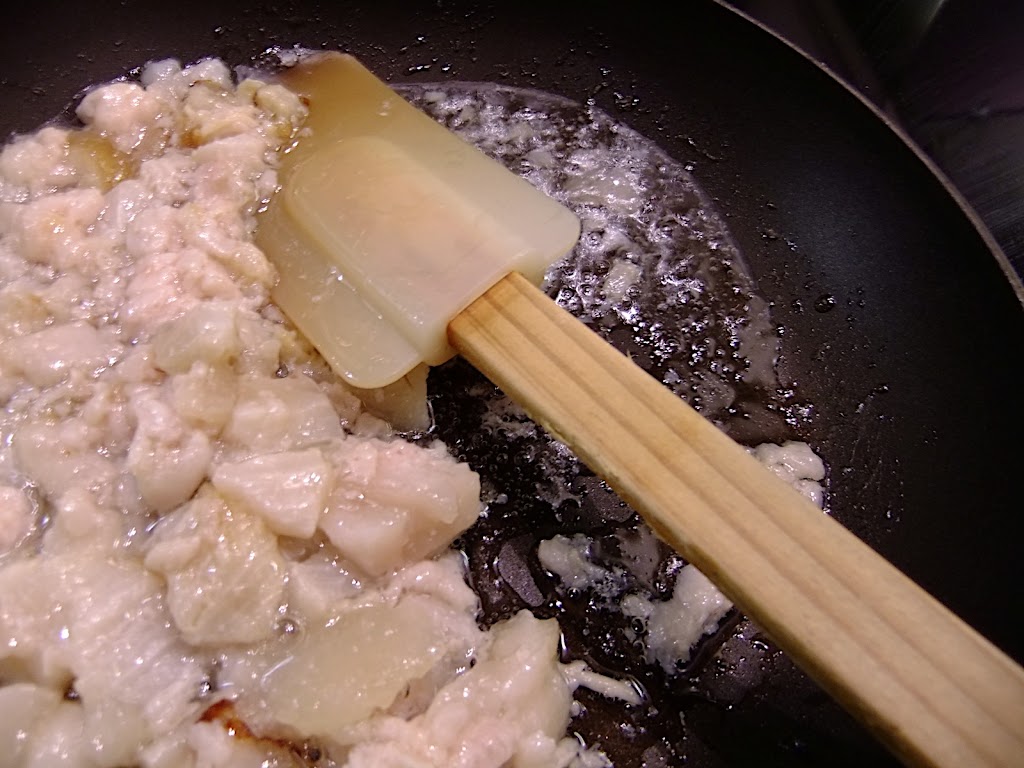
I know ... I know ... the horror! Non-stick pans and a silicone spatula! I can't use cast iron on my ceramic hob, but we are in the process of moving and there, I will be able to.

Anyway, "needs must", so today I use these pans.

Simply dice and drop into a frying pan on a medium heat.

Clear liquid fat will render out, so periodically pour that off through a sieve into a ramekin.

Repeat a number of times, even pressing down the fat to fully release any final juices.

You will be left with a clear, slightly off white liquid which will cool to a solid, but soft texture.