Showing posts with label moroccan. Show all posts
22/10/2012
Fish Tagine
Tagine is a North African dish of Berber origin (Tajin) named after the earthenware pot within which it is cooked and the mainstay of Moroccan cuisine.
Traditionally, the tagine is made from heavy clay and needs curing by soaking in water before first use - see: iTagine, the tops often decorated and glazed. Moden tagines often feature a cast iron base.
The shape of the lid is designed so as to return cooking steam back to the base of the dish and the weight keeping the dish sealed. Think of the tagine as an ancient pressure cooker.
Tagines combine meat, spices, vegetables, fruit and herb garnishes in a slow-simmering over the coals of an open fire ... or the cooker hob in our case. Cooked, the dish should be a deep, complex and warming meal brough to the table in the base, the lid removed and the heady, steamy aroma enjoyed as a precursor to the meal eaten from the base itself, or spooned over couscous on an individual plate.
Don your Fez, we're off to Casablanca ...
First, the couscous. Again, of Berber origin (Seksu, meaning well rolled, formed and rounded), couscous is made from millet so not a lot of use to paleo people. One obvious substitution is cauliflower couscous, finely grated and dried in the oven, or lightly steamed and crushed before warming through in a dry frying pan.
So, to the tagine itself. Think your ingredients through - the dish should be dressed up and pretty to look at.
Smoked fish, in a deep, flavoursome tomato sauce with butternut squash, courgette, peppers and lemon.
The dish could, of course, include all manner of other goodies: harissa, olives, almonds, the list is endless. Tagines are made from what you have available, cooked through sequentially, dressed up and then left to warm through in its own steam.
To the stove ...
First warm the tagine base through on the hob and turn the heat down. Mine is Le Crueset brand and made of cast iron.
Melt some fat and soften some shallots and shaved fennel. The fennel will punch through the tomato and liven up the fish. Toss in some crushed garlic and then a carton of chopped tomatoes. Thicken with a little tomato purée.
Toss in the cubes of butternut squash and let it simmer for 15 minutes, or so, with the lid on. The squash should now be cooked through.
Poke in pieces of smoked fish - I used cod. The fish should be submerged into the tomato sauce, which, should now be nice and thick.
Dress the tagine with lemon slices over the top, courgette slices all around the edge and pepper rings arranged as a crown. You can be more decorative with other ingredients here - let your imagination go.
Fresh coriander leaf to garnish, lid on and let it simmer for another 10-15 minutes.
Present at the table, removing the lid and enjoying the heady aroma.
Spoon out over your cauliflower couscous and enjoy.
13/05/2012
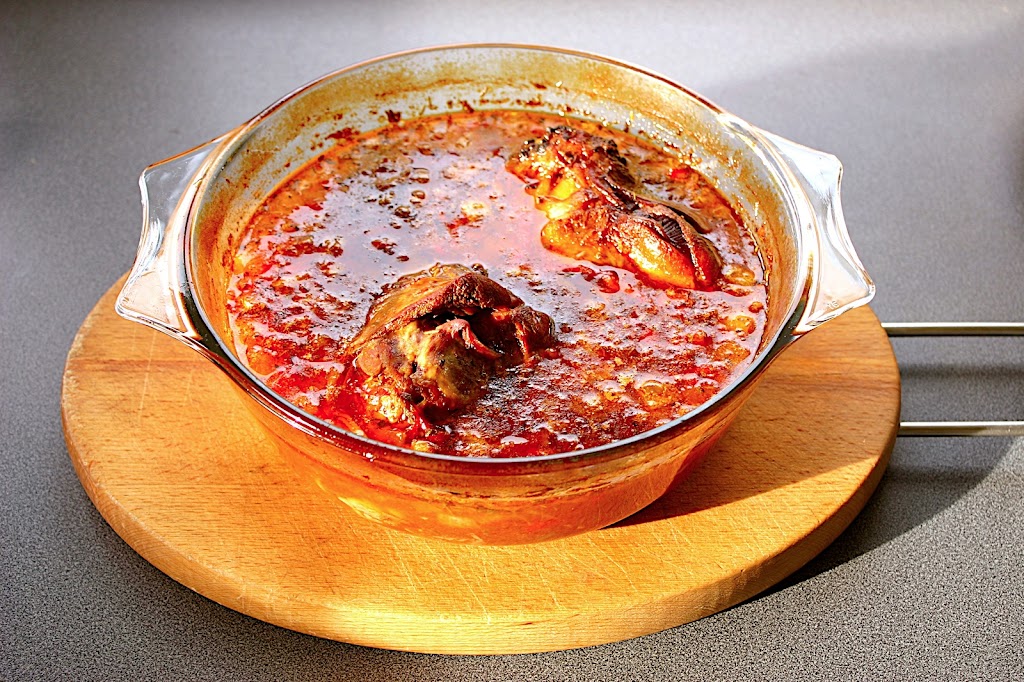
Spicy Braised Lamb Shanks
What's better than lamb shanks? Spicy lamb shanks!
Better still, this one pot dish is so easy and hassle-free it surprises me that I do not make it more frequently.
First, lamb shanks.
From the BBC, shanks are the "meaty cut from the lower end of the leg is full of flavour and will become meltingly tender, and fall from the bone after long, slow cooking."
Several hours before you want to eat ...
First, brown off your shanks in a heavy-based skillet.
While they're browning, chop some sweet red pepper and lay this into the bottom of an ovenproof dish. Sweet red peppers will give a deep, sweet flavour, which counters the spicy punch of the chillies we'll use. Cover with a good helping of tomato purée, for flavour and thickening.
Settle the lamb shanks onto the bed of peppers.
Chop an onion and sauté it in the residual fat in the skillet which will have rendered from the shanks. Pour over the shanks.
Mince a few bulbs of garlic and toss them into the dish - lamb can take a lot of garlic. I used maybe 6 or 8 cloves!
Mince a couple of chillies and toss them in.
Add a few flavours and colours, like coriander and paprika; aromatics, thyme, sage and rosemary; white pepper and celery salt.
Pour over some lamb stock to cover.
Lid on and into the oven set to 100C for the day.
Enjoyed your day? Great! Let's eat ...
Retrieve the shanks from the dish and place one into each bowl.
Blend the whole braising jus - this will help emulsify the fat into the liquid and make a deep, sumptuous sauce.
Boil the jus rapidly for a few minutes to reduce and thicken, then pour over the shanks and garnish with some fresh herbs - I used parsley.
Is that it?
Well, yes ... you could serve some steamed veggies alongside, even some potato, but I prefer a light Mediterranean salad of feta cheese, olives, tomatoes, capers, pickled chillies and pickled beetroot.
The meat should literally fall off the bone. Don't forget to winkle out the marrow!
Burp!
Better still, this one pot dish is so easy and hassle-free it surprises me that I do not make it more frequently.
First, lamb shanks.
From the BBC, shanks are the "meaty cut from the lower end of the leg is full of flavour and will become meltingly tender, and fall from the bone after long, slow cooking."
Several hours before you want to eat ...
First, brown off your shanks in a heavy-based skillet.
While they're browning, chop some sweet red pepper and lay this into the bottom of an ovenproof dish. Sweet red peppers will give a deep, sweet flavour, which counters the spicy punch of the chillies we'll use. Cover with a good helping of tomato purée, for flavour and thickening.
Settle the lamb shanks onto the bed of peppers.
Chop an onion and sauté it in the residual fat in the skillet which will have rendered from the shanks. Pour over the shanks.
Mince a few bulbs of garlic and toss them into the dish - lamb can take a lot of garlic. I used maybe 6 or 8 cloves!
Mince a couple of chillies and toss them in.
Add a few flavours and colours, like coriander and paprika; aromatics, thyme, sage and rosemary; white pepper and celery salt.
Pour over some lamb stock to cover.
Lid on and into the oven set to 100C for the day.
Enjoyed your day? Great! Let's eat ...
Retrieve the shanks from the dish and place one into each bowl.
Blend the whole braising jus - this will help emulsify the fat into the liquid and make a deep, sumptuous sauce.
Boil the jus rapidly for a few minutes to reduce and thicken, then pour over the shanks and garnish with some fresh herbs - I used parsley.
Is that it?
Well, yes ... you could serve some steamed veggies alongside, even some potato, but I prefer a light Mediterranean salad of feta cheese, olives, tomatoes, capers, pickled chillies and pickled beetroot.
The meat should literally fall off the bone. Don't forget to winkle out the marrow!
Burp!
26/07/2011
Tagine with Cauliflower Couscous
Tagine is a North African dish of Berber origin (Tajin) named after the earthenware pot within which it is cooked and the mainstay of Moroccan cuisine.
Traditionally, the tagine is made from heavy clay and needs curing by soaking in water before first use - see: iTagine, the tops often decorated and glazed. Moden tagines often feature a cast iron base.
The shape of the lid is designed so as to return cooking steam back to the base of the dish and the weight keeping the dish sealed. Think of the tagine as an ancient pressure cooker.
Tagines combine meat, spices, vegetables, fruit and herb garnishes in a slow-simmering over the coals of an open fire ... or the cooker hob in our case. Cooked, the dish should be a deep, complex and warming meal brough to the table in the base, the lid removed and the heady, steamy aroma enjoyed as a precursor to the meal eaten from the base itself, or spooned over couscous on an individual plate.
Don your Fez, we're off to Casablanca ...
First, the couscous. Again, of Berber origin (Seksu, meaning well rolled, formed and rounded), couscous is made from millet so not a lot of use to paleo people. One obvious substitution is cauliflower couscous, finely grated and slightly dried in an oven before warming through in a dry frying pan.
So, to the tagine itself. Think your ingredients through - the dish should be dressed up and pretty to look at.
Begin with browning any meat and placing in the tagine.
Next, make the spicy sauce - onions and tomatoes as the base, spiced with coriander, cumin, cayenne pepper, maybe cinnamon and some salt. Add in any other vegetables that will form the sauce. Pour over the meat in the tagine.
Now it gets fun! Slice, dice or form any other ingredients - slices of carrot or courgette, cubes of aubergine, round prunes, olives, slices of preserved lemons, as examples. Arrange in the dish in a pattern - your imagination should go wild. Garnish with chopped or sliced chillis, herbs and maybe some pickled or preserved items.
Put the lid on and place on the hob at a high heat until it comes up to heat, then turn right down and leave it sit for a couple of hours.
Bring to the table on a heavy wooden board, couscous in a bowl.
Play it again, Sam!
Traditionally, the tagine is made from heavy clay and needs curing by soaking in water before first use - see: iTagine, the tops often decorated and glazed. Moden tagines often feature a cast iron base.
The shape of the lid is designed so as to return cooking steam back to the base of the dish and the weight keeping the dish sealed. Think of the tagine as an ancient pressure cooker.
Tagines combine meat, spices, vegetables, fruit and herb garnishes in a slow-simmering over the coals of an open fire ... or the cooker hob in our case. Cooked, the dish should be a deep, complex and warming meal brough to the table in the base, the lid removed and the heady, steamy aroma enjoyed as a precursor to the meal eaten from the base itself, or spooned over couscous on an individual plate.
Don your Fez, we're off to Casablanca ...
First, the couscous. Again, of Berber origin (Seksu, meaning well rolled, formed and rounded), couscous is made from millet so not a lot of use to paleo people. One obvious substitution is cauliflower couscous, finely grated and slightly dried in an oven before warming through in a dry frying pan.
So, to the tagine itself. Think your ingredients through - the dish should be dressed up and pretty to look at.
Begin with browning any meat and placing in the tagine.
Next, make the spicy sauce - onions and tomatoes as the base, spiced with coriander, cumin, cayenne pepper, maybe cinnamon and some salt. Add in any other vegetables that will form the sauce. Pour over the meat in the tagine.
Now it gets fun! Slice, dice or form any other ingredients - slices of carrot or courgette, cubes of aubergine, round prunes, olives, slices of preserved lemons, as examples. Arrange in the dish in a pattern - your imagination should go wild. Garnish with chopped or sliced chillis, herbs and maybe some pickled or preserved items.
Put the lid on and place on the hob at a high heat until it comes up to heat, then turn right down and leave it sit for a couple of hours.
Bring to the table on a heavy wooden board, couscous in a bowl.
Play it again, Sam!
18/05/2009
Meatball Tagine
Tagine is a North African dish of Berber origin (Tajin) named after the earthenware pot within which it is cooked and the mainstay of Moroccan cuisine.
Traditionally, the tagine is made from heavy clay and needs curing by soaking in water before first use - see: iTagine, the tops often decorated and glazed. Moden tagines often feature a cast iron base.
The shape of the lid is designed so as to return cooking steam back to the base of the dish and the weight keeping the dish sealed. Think of the tagine as an ancient pressure cooker.
Tagines combine meat, spices, vegetables, fruit and herb garnishes in a slow-simmering over the coals of an open fire ... or the cooker hob in our case. Cooked, the dish should be a deep, complex and warming meal brough to the table in the base, the lid removed and the heady, steamy aroma enjoyed as a precursor to the meal eaten from the base itself, or spooned over couscous on an individual plate.
Don your Fez, we're off to Casablanca ...
First, something to serve the dish over: the couscous. Again, of Berber origin (Seksu, meaning well rolled, formed and rounded), couscous is made from millet so not a lot of use to paleo people.
One obvious substitution is cauliflower couscous, finely grated and slightly dried in an oven before warming through in a dry frying pan.
So, to the tagine itself.
First, make the meatballs by placing a pound or more of lamb mince into a mixing bowl and adding in some spices - ground coriander and cumin, a little salt and maybe some white pepper. Squeeze the meat between your fingers a few times to ensure that the spices are combined and the meat is broken down a little. Form little meatballs about the size of large marbles.
Begin by browning the meatballs off in the tagine base with a little dripping or coconut oil, adding in a chopped onion to soften, some minced garlic and shaved fennel. Shaved? I do this with a vegetable peeler. Fennel adds in a subtle flavour which works in the background, rounding off all the other flavours.
Pour in a carton of chopped tomatoes and perhaps a little puree to thicken and compound the tomato flavours.
Slice some carrot and courgette and fold in.
Finally, add a good handful of olives.
Lid on ... low heat for a couple of hours, or more; timing is simply not an issue with a tagine, so just let it cook away happily.
Serve out over the cauliflower couscous and garnish with fresh coriander leaves and a further pinch of cumin.
Traditionally, the tagine is made from heavy clay and needs curing by soaking in water before first use - see: iTagine, the tops often decorated and glazed. Moden tagines often feature a cast iron base.
The shape of the lid is designed so as to return cooking steam back to the base of the dish and the weight keeping the dish sealed. Think of the tagine as an ancient pressure cooker.
Tagines combine meat, spices, vegetables, fruit and herb garnishes in a slow-simmering over the coals of an open fire ... or the cooker hob in our case. Cooked, the dish should be a deep, complex and warming meal brough to the table in the base, the lid removed and the heady, steamy aroma enjoyed as a precursor to the meal eaten from the base itself, or spooned over couscous on an individual plate.
Don your Fez, we're off to Casablanca ...
First, something to serve the dish over: the couscous. Again, of Berber origin (Seksu, meaning well rolled, formed and rounded), couscous is made from millet so not a lot of use to paleo people.
One obvious substitution is cauliflower couscous, finely grated and slightly dried in an oven before warming through in a dry frying pan.
So, to the tagine itself.
First, make the meatballs by placing a pound or more of lamb mince into a mixing bowl and adding in some spices - ground coriander and cumin, a little salt and maybe some white pepper. Squeeze the meat between your fingers a few times to ensure that the spices are combined and the meat is broken down a little. Form little meatballs about the size of large marbles.
Begin by browning the meatballs off in the tagine base with a little dripping or coconut oil, adding in a chopped onion to soften, some minced garlic and shaved fennel. Shaved? I do this with a vegetable peeler. Fennel adds in a subtle flavour which works in the background, rounding off all the other flavours.
Pour in a carton of chopped tomatoes and perhaps a little puree to thicken and compound the tomato flavours.
Slice some carrot and courgette and fold in.
Finally, add a good handful of olives.
Lid on ... low heat for a couple of hours, or more; timing is simply not an issue with a tagine, so just let it cook away happily.
Serve out over the cauliflower couscous and garnish with fresh coriander leaves and a further pinch of cumin.
06/08/2006
Lamb Shanks with Mediterranean Salad
Shanks are the tibia, the bone below the knee.
Lamb shanks are a thrifty cut. Braised whole, you're left with meat falling off the bone, deep, flavoursome and beautifully fatty.
Long, slow cooking is the key ...
I use a tagine with the shanks standing up, held in place by the conical top, sitting in just a little water which rises and condenses in the tagine - pretty much, a primitive pressure cooker.
Simple! Just put the shanks in, add water and set on a low heat for the day ...
Feel free to pep up the dish a little with ground coriander, cumin, some chilli, maybe onions and garlic - the sauce can be blended and passed through a sieve to make a really sumptuous gravy.
Plate up! I like lamb shanks with a simple salad of tomato, cucumber, olives (in brine) and cubes of feta. Garnish with coriander.
This combination gives a few offsets to the fattiness of the meat, but again, feel free to serve up with some vegetables and pour over the gravy made from the braising stock.
Lamb goes very well with deep greens - collard, mustard greens, kale, cavolo nero, spinach or samphire. That strong pack of iron compliments the meat perfectly.
For colour, carrot or swede are perfect. In fact, to accompany the simple salad above, ribbons of carrot and courgette would work very well.
Ideas! Ideas!
Lamb shanks are a thrifty cut. Braised whole, you're left with meat falling off the bone, deep, flavoursome and beautifully fatty.
Long, slow cooking is the key ...
I use a tagine with the shanks standing up, held in place by the conical top, sitting in just a little water which rises and condenses in the tagine - pretty much, a primitive pressure cooker.
Simple! Just put the shanks in, add water and set on a low heat for the day ...
Feel free to pep up the dish a little with ground coriander, cumin, some chilli, maybe onions and garlic - the sauce can be blended and passed through a sieve to make a really sumptuous gravy.
Plate up! I like lamb shanks with a simple salad of tomato, cucumber, olives (in brine) and cubes of feta. Garnish with coriander.
This combination gives a few offsets to the fattiness of the meat, but again, feel free to serve up with some vegetables and pour over the gravy made from the braising stock.
Lamb goes very well with deep greens - collard, mustard greens, kale, cavolo nero, spinach or samphire. That strong pack of iron compliments the meat perfectly.
For colour, carrot or swede are perfect. In fact, to accompany the simple salad above, ribbons of carrot and courgette would work very well.
Ideas! Ideas!
Subscribe to:
Posts
(
Atom
)